Pickleball’s East Coast Boom Is Reshaping Construction in 2026
Pickleball is no longer a niche pastime, it’s one of the fastest-growing sports in America, and the East Coast is at the center of the surge. In 2025 alone, more than 7,262,000 people played pickleball on the East Coast, including a massive concentration of players in New York. With a 311% total growth rate from 2021 to 2024, the sport’s rise is directly impacting how communities, developers, and municipalities approach recreational construction.
For construction leaders like Skyward Construction Group, this growth represents more than a trend; it signals a long-term shift in how outdoor and indoor athletic spaces are designed, built, and prioritized.
Pickleball’s Explosive Growth by the Numbers
Pickleball’s appeal cuts across generations. It’s easy to learn, social by nature, and adaptable to both indoor and outdoor settings. These qualities have fueled unprecedented growth:
- 311% total growth between 2021 and 2024
- Over 7.2 million East Coast players in 2025
- Rapid conversion of tennis courts, underutilized land, and indoor warehouse spaces into pickleball facilities
This surge has placed significant pressure on existing infrastructure, especially in densely populated states where court availability struggles to keep up with demand.
East Coast “Hot Zones” Driving Court Construction
While pickleball participation is rising nationwide, Florida, New York, and North Carolina have emerged as primary East Coast “hot zones” for both player participation and new court construction.
- Florida continues to lead in recreational adoption, driven by year-round play and active adult communities.
- New York has seen explosive growth in both public and private facilities, with urban, suburban, and mixed-use developments racing to add courts.
- North Carolina is rapidly expanding its pickleball footprint through parks, HOAs, and residential developments.
Across all three states, demand is no longer limited to public parks. Developers are now integrating pickleball courts into multifamily housing, resorts, private clubs, schools, and corporate campuses.
What This Means for Construction in 2026
The pickleball boom is changing construction priorities in several key ways:
- Faster Project Timelines
Owners want courts built quickly to capitalize on demand, pushing the need for efficient planning and execution. - Higher Quality Standards
Players expect professional-grade surfaces, proper drainage, lighting, fencing, and sound mitigation, especially in urban environments. - Multi-Use Design
Many projects require courts that integrate seamlessly into mixed-use developments, combining recreation with aesthetics and long-term durability. - Indoor Facility Growth
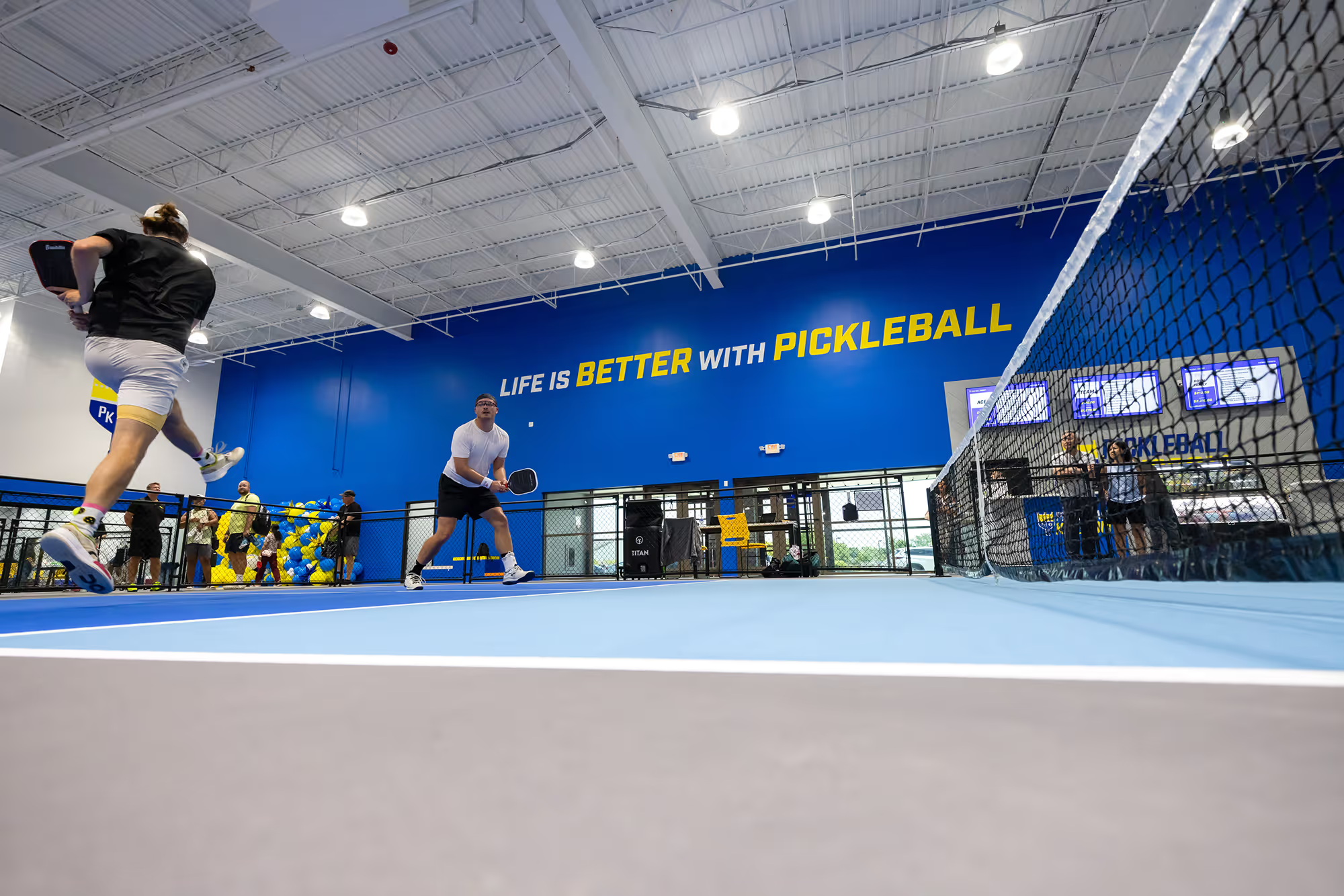
Particularly in New York and North Carolina, climate-controlled indoor pickleball facilities are becoming a major focus for developers.
Skyward Construction Group: Building for the Future of Recreation
At Skyward Construction Group, we understand that pickleball courts are more than just lines on asphalt, they’re community hubs, revenue drivers, and long-term investments. As participation continues to surge in East Coast hot zones, our team focuses on:
- Durable, performance-driven court construction
- Smart site planning for urban and suburban environments
- Scalable solutions for developers, municipalities, and private owners
- Future-ready designs that can adapt as the sport continues to evolve
Looking Ahead
With millions of players and no signs of slowing growth, pickleball is shaping the future of recreational construction in 2026 and beyond. States like Florida, New York, and North Carolina are setting the pace, and the demand for expertly built courts will only increase. It has been estimated that over 25,000 new Pickleball courts need to be built in 2026.
For developers and property owners, the question is no longer if pickleball should be included, but how well it’s built.
Skyward Construction Group is proud to help shape the next generation of athletic and community spaces, one court at a time.